
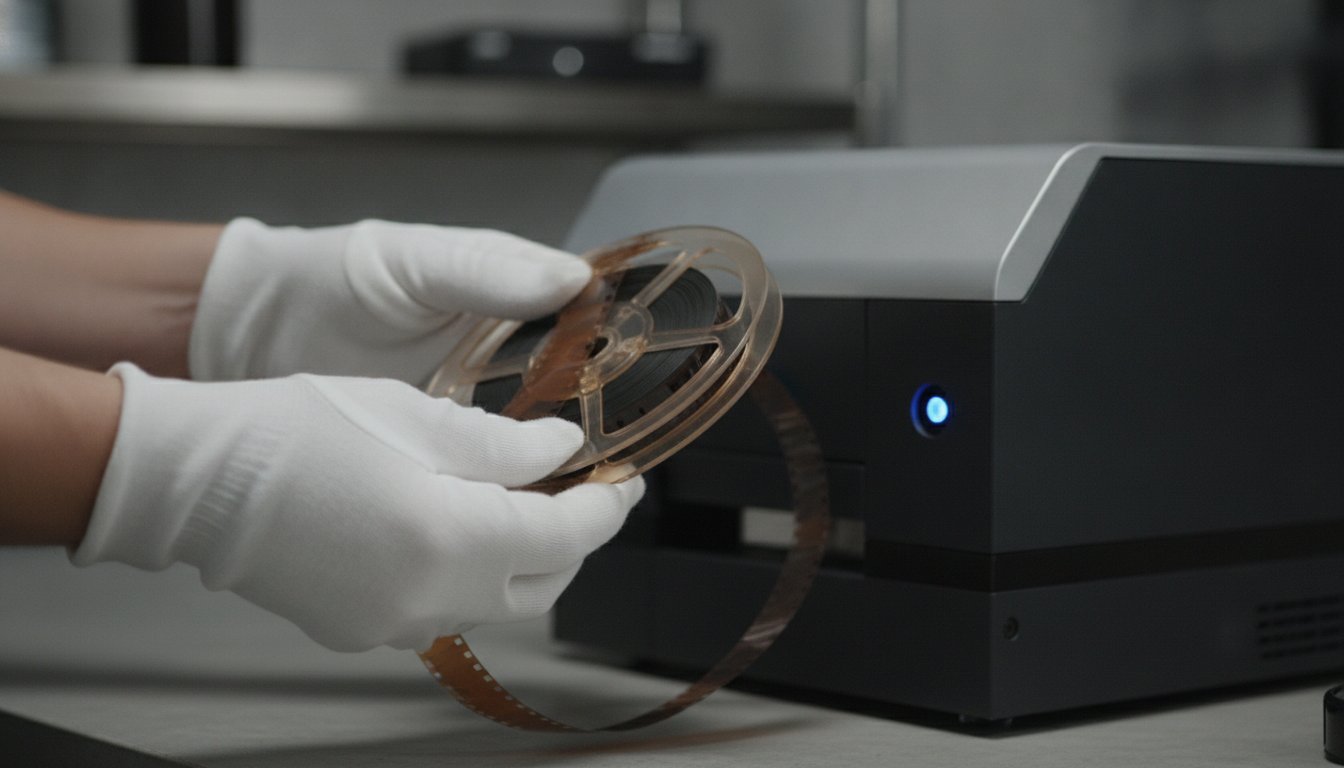
You open a weathered shoebox to find your family’s history captured on silent, flickering reels. Then, a sharp, acidic scent hits you. This is the unmistakable warning of vinegar syndrome, a chemical decay that threatens to erase your most precious memories forever. It’s a heavy realization that these physical artifacts are more fragile than we’d like to admit. You deserve to feel confident that your heritage is being handled with the utmost care, not tossed into a nameless bin at a high-volume factory. Choosing a professional 8mm film to digital conversion service is about more than just technology; it’s about entrusting your story to an archivist who understands the weight of every frame.
Discover how to transform fragile 8mm and Super 8 reels into stunning, high-definition digital archives that preserve your family legacy for generations. We’ll explore the nuances of archival scanning, clarify the technical differences between film formats, and detail the white-glove process that ensures your original reels return home safely. You’ll learn how a meticulous approach to restoration can breathe new life into faded colors, grainy textures, and silent scenes. By the end, you’ll have a clear path to securing your past through a process that is precise, artistic, and entirely secure.
Key Takeaways
- Recognize the biological clock of your media and identify the specific chemical triggers, such as vinegar syndrome, that signal the need for immediate archival intervention.
- Navigate the technical complexities of frame-by-frame scanning to ensure your legacy is captured with the sharpness, vibrancy, and depth it deserves.
- Evaluate the significant risks of DIY methods and understand how a specialized 8mm film to digital conversion service offers a level of security and expertise that protects your irreplaceable originals.
- Implement a structured system for inspecting and labeling your collection to transform a chaotic box of reels into a curated, accessible, and meaningful digital legacy.
- Appreciate the value of a bespoke preservation partner who treats every frame with the meticulous care, technical skill, and emotional reverence it requires.
The Urgency of 8mm Film to Digital Conversion
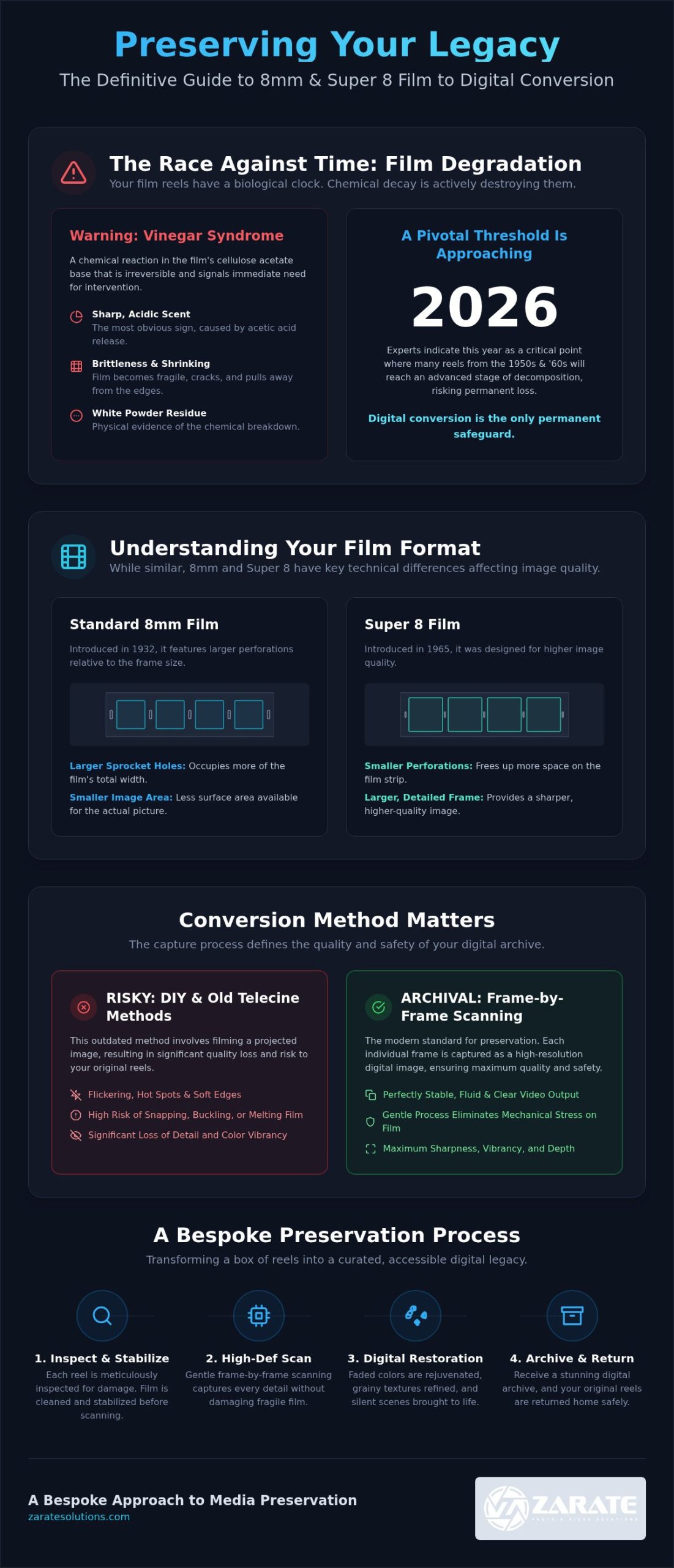
Time is a silent thief. While we often view old film reels as timeless artifacts, they are actually organic materials governed by a relentless biological clock. The 8mm film format, which captured the post-war boom and the intimate moments of the mid-20th century, was primarily manufactured using cellulose acetate. This material is inherently unstable. It’s not a matter of if the film will degrade, but when. Experts often point to 2026 as a pivotal threshold. This date marks the point where many reels from the 1950s and 60s will reach a critical stage of decomposition. Without the intervention of a professional 8mm film to digital conversion service, these visual records risk becoming lost to history forever.
One of the most devastating signs of decay is known as Vinegar Syndrome. This chemical reaction occurs when the acetate base reacts with moisture, releasing acetic acid that creates a sharp, pungent odor. Once you smell that vinegar-like scent, the process has begun. You might notice the film becoming brittle, shrinking away from its edges, or developing a white, powdery residue. These are not merely cosmetic issues. They represent the literal liquefaction of your memories. Professional archival preservation is distinct from simple digitization because it involves stabilizing, cleaning, and securing these fragile materials before they are even scanned.
Understanding Film Degradation
Environmental factors act as catalysts for destruction. High heat, fluctuating humidity, and poor ventilation accelerate the breakdown of the film’s emulsion. As the base shrinks, the film can no longer pass through a traditional projector without snapping, buckling, or melting. Digital conversion offers the only permanent safeguard. It arrests the decay, captures the data, and ensures the image remains pristine. By migrating these frames to a high-definition digital format, you are effectively stopping the clock and protecting your investment in your family’s past.
The Emotional Value of Preservation
Preserving these reels is an act of deep reverence. It’s about moving beyond the technical mechanics and capturing the essence of a family’s journey. Embarking on a comprehensive analog to digital conversion project allows you to honor the legacy of those who came before. This process transforms forgotten, dusty boxes into vibrant, shareable stories that can be enjoyed on modern screens. You’re not just saving data. You’re safeguarding the laughter, the milestones, and the quiet moments that define your heritage. It’s a bridge between generations, ensuring that the stories of the past remain a living part of your family’s future. Many families discover that their archive extends well beyond film reels, and learning how to convert VHS tapes to digital is an equally vital step in building a complete and lasting legacy.
Technical Standards for 8mm and Super 8 Conversion
Achieving a true archival transfer requires more than just modern equipment. It demands a deep understanding of the mechanical and chemical properties of vintage media. While 8mm and Super 8 film may look similar to the untrained eye, they possess distinct technical profiles. Standard 8mm film, introduced in 1932, features larger sprocket holes and a smaller image area. Super 8, which arrived in 1965, optimized the layout with smaller perforations to allow for a larger, more detailed frame. Professional film preservation standards dictate that each format must be handled with specialized gates and rollers to prevent tension. A high-end 8mm film to digital conversion service treats these differences not as inconveniences, but as the foundation for a bespoke restoration process.
Frame-by-Frame Scanning vs. Projection
The method of capture defines the ultimate quality of your digital archive. Older “telecine” methods often involved simply filming a projected image, a shortcut that inevitably introduced flickering, hot spots, and soft edges. Modern archival standards utilize frame-by-frame scanning. This process captures each individual image as a high-resolution data point, ensuring that every detail is frozen in time without the motion blur associated with traditional projectors. This meticulous approach is gentle, precise, and exhaustive. It eliminates the mechanical stress on fragile film sprockets, allowing even compromised reels to be digitized safely. By isolating every frame, we can ensure the resulting video is stable, fluid, and remarkably clear.
Resolution and Digital Formats
Resolution is the canvas upon which your memories are repainted. While standard definition was once the norm, modern displays require a much higher density of information to look natural. High-definition scanning at 1080p or 2K captures the organic grain of the film without introducing digital artifacts. To ensure your family legacy remains compatible with future technology, 1080p resolution is the minimum standard for 2026 archives. We typically provide files in versatile formats like MP4 or MOV, which balance file size with visual fidelity. For those seeking the ultimate in preservation, uncompressed archival masters are also available. These files allow for advanced grain reduction and digital noise removal, stripping away decades of dust while keeping the underlying image intact.
The final stage of a premium transfer is professional color correction. Over decades, the dyes in film emulsion can shift toward magenta or cyan, leaving your memories looking unnatural and faded. Our specialists manually balance the levels, saturation, and contrast of your footage to restore its original vibrancy. We work to ensure that skin tones are warm, skies are blue, and the atmosphere of the original moment is preserved. If you are looking for this level of artistic and technical dedication, our team at Zarate Photo & Video Solutions can help you navigate the transition from analog reels to a stunning digital future.
Professional Services vs. DIY: The True Cost of Quality
The temptation to manage a preservation project at home is understandable. Many families consider purchasing a consumer-grade scanner, lured by the promise of convenience and a lower price point. This is often referred to as the ‘Cheap Scanner’ trap. These devices, while accessible, typically utilize plastic components and basic sensors that struggle to resolve the fine grain of vintage film. They lack the sophisticated tension-sensing technology required to handle brittle acetate safely. A single mechanical jam in a low-end device can result in permanent film scratches, torn sprockets, or irreparable heat damage. Choosing a professional 8mm film to digital conversion service is an investment in the physical safety of your originals as much as the quality of the final file.
Professional intervention begins long before the scanning light is even activated. It involves a meticulous process of inspection, splicing, and cleaning. We manually repair failing splices that would otherwise snap during playback. We apply specialized lubricants that revitalize the film base, ensuring it glides through the gate without friction. This level of preparation is absent in DIY setups and mass-market factories alike. While high-volume processors treat your reels like widgets on a conveyor belt, a boutique studio provides the individual attention your unique narrative requires.
The Hidden Challenges of DIY Conversion
The true cost of a home project is often measured in time and technical frustration. High-quality manual scanning is an exhaustive endeavor that requires hundreds of hours for even a modest collection. Beyond the clock, there are significant hurdles in correcting exposure and white balance. Old film frequently suffers from color shifts and fading that consumer-level software simply cannot rectify. Without professional post-processing tools, your digital files may end up looking dark, muddy, or unnaturally tinted, failing to capture the true spirit of the original moment. These same challenges extend beyond film to your entire visual archive, and understanding the full scope of professional photo scanning vs DIY methods is essential for any family serious about long-term preservation. The same principle applies when you need to convert VHS tapes to digital, where magnetic tape degradation presents its own unique set of technical challenges that consumer equipment is ill-equipped to handle.
Why a Boutique Studio Matters
A boutique approach offers a ‘White-Glove’ experience that values quality over sheer volume. Every reel is treated as a distinct piece of history, receiving a tailored plan for restoration and capture. This personalized care ensures that the nuances of your footage are preserved with artistic intent. Furthermore, our specialized digital media recovery services provide an essential safety net for your project. We possess the technical expertise to salvage data from compromised sources, offering a level of security that home equipment and automated factories cannot match. This commitment to excellence ensures your family’s story is told with clarity, vibrancy, and deep respect.
Preparing Your Reels for a Conversion Service
Handing over a collection of family films is a significant act of trust. Before you select an 8mm film to digital conversion service, you should treat your reels with the same reverence they will receive once they arrive at the studio. Preparation is not merely a logistical necessity. It is a vital, intentional, and rewarding first step in reclaiming your family’s narrative. By organizing your media thoughtfully, you ensure that the final digital archive is logical, accessible, and deeply meaningful for future generations. This process allows you to rediscover forgotten faces and places while ensuring your legacy remains intact during the transition.
Organization and Cataloging
Start by sorting your reels into a coherent structure. You might choose to group them by decade, specific family branches, or significant life milestones. This creates a narrative flow that makes the final digital library much easier to navigate. We recommend creating a master inventory list that includes any dates, names, or locations written on the original boxes. Use descriptive titles on your labels to help our technicians understand the context of each reel. This collaboration ensures that the resulting digital files are properly named and organized from the moment they are delivered, saving you hours of sorting later.
- Inspect physical condition: Gently check for loose splices or warped edges, though you should avoid unspooling the film yourself to prevent oil transfer from your skin.
- Chronological sorting: Arrange reels from oldest to newest to preserve the timeline of your family’s history in its original sequence.
- Digital naming conventions: Decide how you want your files labeled, such as “1964_Summer_Vacation” or “Smith_Family_Christmas_1958,” to ensure the archive is searchable.
Shipping and Security Best Practices
The journey from your home to the preservation studio requires multiple layers of protection. Irreplaceable media should never be sent in a single, thin envelope. Use sturdy, moisture-proof packaging to shield the film from the unpredictable elements. We advocate for the double-boxing method. Place your organized reels into a sealed plastic bag, put that bag into a small box with ample padding, and then place that smaller box inside a larger shipping container. This creates a critical buffer against impact, moisture, and temperature fluctuations during transit. Always opt for a shipping method that includes robust tracking and high-value insurance coverage.
Choosing a partner who prioritizes secure, white-glove handling over high-volume factory processing is essential for your peace of mind. Ask potential providers about their intake process and how they track individual reels through every stage of the conversion. A reputable partner will be transparent about their security protocols and technical standards. If you are ready to begin this journey with a team that values your history as much as you do, you can start your preservation project with Zarate Photo & Video Solutions today. We are here to guide you through every step of this precise, professional, and protective process.
Zarate Solutions: A Bespoke Approach to Media Preservation
Preservation is an act of deep responsibility. At Zarate Photo & Video Solutions, we believe that your family’s history deserves more than a standard technical transfer; it requires a partnership rooted in respect, expertise, and artistry. While mass-market factories prioritize volume and speed, our boutique studio focuses on the individual narrative contained within every reel. We merge the technical precision of modern optics with the heart of a storyteller, ensuring that the flickering images of your past are transformed into a vivid, enduring legacy. Choosing our 8mm film to digital conversion service means choosing a path where your memories are treated with the dignity they deserve.
Our approach is defined by a quiet confidence and a commitment to high-end craftsmanship. We understand that these films are often the only surviving records of significant life milestones. Because we operate as a specialized partner rather than a high-volume processor, we can offer a level of customization that is simply unavailable elsewhere. From the initial inspection to the final color-corrected file, every stage of our process is methodical, deliberate, and secure. We don’t just digitize media; we safeguard the emotional weight of your personal history. Families who want to understand the full cost to digitize home movies in 2026 will find that a transparent, quality-focused approach offers far greater long-term value than mass-market alternatives.
A Commitment to Archival Integrity
We view every film reel as a priceless historical artifact. Our philosophy is built on the synergy between our deep photography expertise and our technical mastery of media restoration. This dual perspective allows us to see beyond the surface of the film, identifying opportunities to enhance clarity while maintaining the organic soul of the original capture. We recognize that a family legacy is multifaceted, often spanning various types of media. To provide a truly holistic archive, we often integrate our film work with our photo album scanning services, creating a unified digital library that captures the full breadth of your visual history.
This comprehensive strategy ensures that no part of your story is left behind. Whether it is a silent Super 8 reel of a wedding or a faded album of childhood portraits, we apply the same rigorous standards of excellence. Our goal is to provide a seamless, white-glove experience that removes the confusion and anxiety often associated with archival projects. We are here to serve as your guide, offering the technical skill, artistic intuition, and emotional reverence required to protect what matters most.
Your Next Steps in Preservation
Beginning your journey toward a permanent digital archive is a simple yet profound step. We invite you to request a tailored quote that reflects the specific needs of your collection. Every project starts with a personalized consultation where we discuss your archival goals, the condition of your media, and the best path forward for restoration. This ensures that the final result is perfectly aligned with your vision. If you are ready to move from a place of concern over decaying film to a state of security in a high-definition future, we are ready to help. Preserve your history with Zarate Photo & Video Solutions and ensure your family’s narrative remains vibrant for generations to come.
Honoring Your Heritage Through Timeless Preservation
The biological clock of vintage media is ticking, but the technology to arrest that decay is more accessible than ever. You’ve learned that true archival quality requires a departure from flickering projections and consumer-grade shortcuts, opting instead for the precision of frame-by-frame scanning. By choosing a dedicated 8mm film to digital conversion service, you’re not just moving files; you’re actively safeguarding the voices, the laughter, and the milestones of those who came before. This transition is an investment in a future where your family’s story remains vibrant, clear, and deeply resonant.
Our team at Zarate Photo & Video Solutions is ready to help you navigate this transition with expert technical restoration and a bespoke studio experience. We provide comprehensive data recovery options for even the most compromised reels, ensuring that every frame is handled with the reverence it deserves. It’s time to bring those silent memories into the light of the modern age. Secure your family legacy with our professional media conversion services and take the first step toward a permanent digital archive. Your history is irreplaceable, and it deserves to be protected with the highest level of craftsmanship.
Archival Preservation: Frequently Asked Questions
What is the difference between 8mm and Super 8 film?
The primary distinction lies in the physical layout of the film strip and the resulting image quality. Standard 8mm film, often called Regular 8, features larger sprocket holes and a smaller frame area, whereas Super 8, introduced later, utilized smaller perforations to allow for a larger, more detailed image. Super 8 reels also frequently included a thin, rust-colored magnetic stripe along the edge to record audio, a feature rarely found on the older 8mm format.
Can you convert 8mm film that has no sound?
How much does 8mm film to digital conversion cost?
The investment for a preservation project depends on the total footage, the physical condition of the reels, and the level of restoration required. Every collection is unique, requiring a tailored approach that values quality and technical precision over mass-market speed. For a comprehensive overview of what influences professional pricing in 2026, our detailed guide to home movie digitization costs provides transparent insight into the variables that shape a fair and accurate quote. We provide personalized quotes after a consultation to ensure your project receives the meticulous attention and bespoke care it deserves without the ambiguity of flat-rate factory pricing.
Will I get my original film reels back after the conversion?
Your original physical artifacts are always returned to you in their original condition. We understand that these reels are irreplaceable family heirlooms that hold immense sentimental and historical value. Once the digital archiving process is complete, we carefully repackage your films using secure, protective materials to ensure their safe return to your home library.
What is the best digital format for storing old home movies?
The ideal format balances visual fidelity, file size, and long-term compatibility. For most families, high-definition MP4 files provide excellent versatility for viewing on modern televisions, computers, and mobile devices. For those seeking the ultimate in archival security, we also offer uncompressed MOV files, which preserve every ounce of data for future restoration or professional editing needs.
How long does the 8mm film conversion process typically take?
The timeline for a professional 8mm film to digital conversion service varies based on the size and complexity of your archive. A meticulous, frame-by-frame scan is a deliberate and methodical process that cannot be rushed if archival integrity is the goal. We prioritize quality over sheer volume, ensuring that every reel undergoes a thorough inspection, cleaning, and restoration phase before the final digital delivery.
Can damaged or broken film reels still be digitized?
Most damaged reels can be salvaged through professional intervention and technical mastery. Our specialists are skilled in repairing brittle splices, managing minor shrinkage, and cleaning reels affected by dust or light surface mold. While severe chemical decay like advanced vinegar syndrome can be challenging, our archival-grade equipment is designed to handle fragile media with extreme gentleness to recover as much history as possible.
Do I need to clean my film before sending it in for conversion?
You should not attempt to clean or lubricate the film yourself, as consumer-grade chemicals and improper handling can cause irreversible damage to the emulsion. Our preservation process includes professional cleaning using specialized, archival-safe solutions and lubricants. We handle the preparation, stabilization, and restoration of your reels in a controlled environment to ensure the safest possible transition from analog to digital.