
What if the only record of your most significant life milestone wasn’t actually gone, but simply waiting for a more expert hand to find it? The sudden silence of a non-responsive hard drive or the jarring error message on a corrupted SD card feels like an irreversible erasure of your history. Engaging a professional digital media recovery service is the definitive path to reclaiming these lost moments. You aren’t just staring at a failed device. You’re facing the potential disappearance of milestones, celebrations, and legacies.
We recognize that your photos and videos are digital heirlooms that deserve meticulous care. The technical jargon surrounding logical failures or physical damage often creates more questions than answers, particularly when you’re worried about the security of your personal media. You deserve a partner who values your privacy as much as your history. It’s a situation often defined by fear and confusion, but it doesn’t have to be the end of your story.
In this article, you’ll discover how expert restoration can retrieve high-resolution image and video files from compromised drives. We’ll explore a secure, confidential handling process that restores your peace of mind along with your data. Finally, you’ll find expert guidance on preventing future data loss, ensuring your narrative remains intact, accessible, and beautifully preserved.
Key Takeaways
- Distinguish between generic retrieval and media-centric restoration. You’ll learn how specialized techniques preserve the artistic integrity and high-resolution quality of your original files.
- Precision matters. Understand how professional hardware imagers bypass standard system errors to perform bit-level reading for the most comprehensive data retrieval.
- Discover why a professional digital media recovery service provides a secure, reliable, and sophisticated alternative to the hidden dangers of consumer-grade software.
- Act immediately. Acquire a step-by-step framework for responding to data loss, starting with the critical requirement to power down your device to prevent further degradation.
- Explore how a bespoke archival approach treats every recovered image as a significant piece of a narrative that is preserved, protected, and cherished.
What is a Digital Media Recovery Service and Why is it Essential?
Digital media recovery is a highly specialized discipline. It represents the technical art of retrieving inaccessible, lost, or corrupted files from complex storage devices. While one might broadly ask What is Data Recovery? to understand the general field, a dedicated digital media recovery service focuses specifically on the visual and auditory nuances of your files. This isn’t merely about binary code; it’s about protecting the resolution, color depth, and frame rate of your most vital moments. The process is meticulous, deliberate, and precise.
There’s a profound distinction between standard IT data retrieval and media-centric restoration. Standard services often prioritize the file structure alone, sometimes at the expense of the file’s internal metadata. In contrast, our approach emphasizes archival integrity, ensuring that the recovered media maintains its original quality without compression or artifacting. For those who have invested in customizable wedding photography packages, the loss of a single drive can mean the disappearance of a legacy. Whether it’s irreplaceable event coverage or a private family archive, the emotional and professional stakes are immense. We treat every bit of data as a piece of a personal narrative that must be respected, secured, and restored. This technical expertise is the ultimate safety net for your history.
Common Scenarios Requiring Professional Intervention
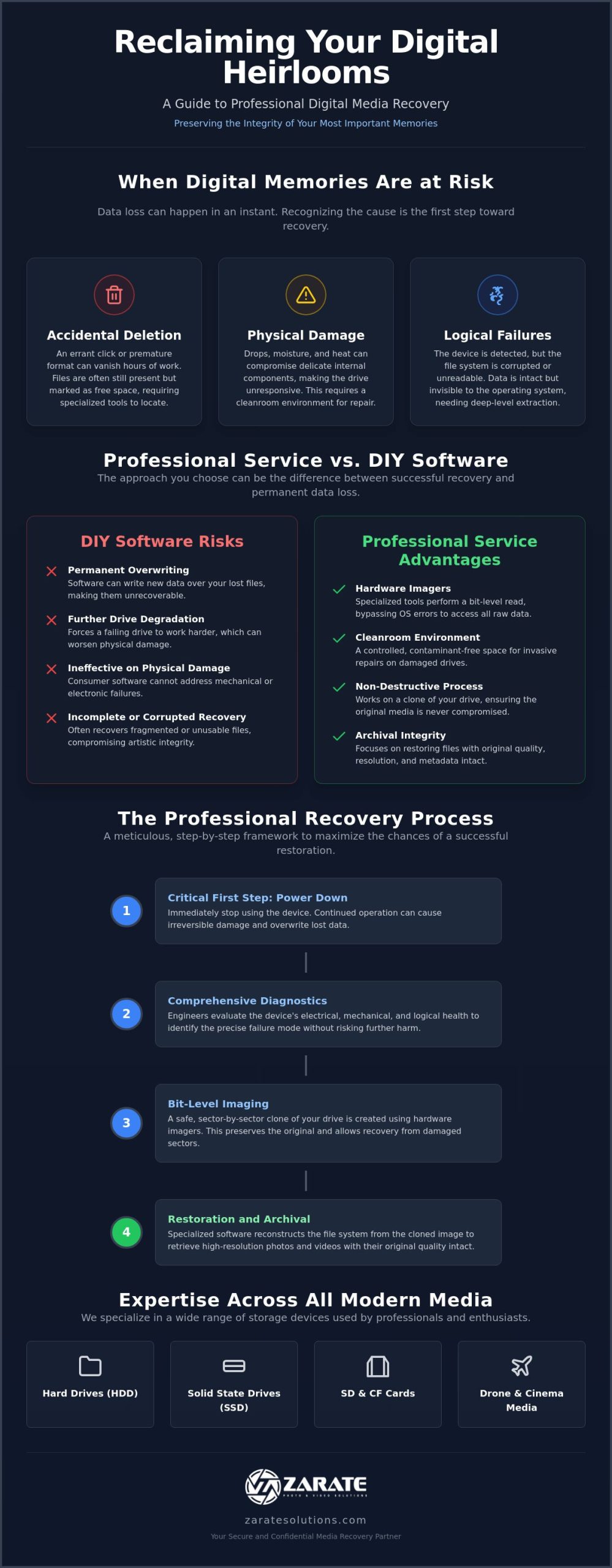
- Accidental Deletion: A single errant click or a premature format during a high-pressure shoot can vanish hours of creative work in an instant.
- Physical Damage: Hardware is inherently vulnerable to the environment. Gravity, moisture, and heat can compromise the delicate internal components of any storage medium.
- Logical Failures: These occur when the device is recognized by the computer, but the file system is corrupted. The data exists, yet it remains invisible and inaccessible to standard operating systems, requiring deep-level extraction.
Supported Media Formats and Devices
The Technical Architecture of Professional Media Recovery
The journey to restoration begins with a meticulous diagnostic phase. Engineers must identify the specific failure mode of the storage media before any recovery attempt is made. This involves a comprehensive evaluation of the device’s electrical, mechanical, and logical health. Unlike consumer grade software that forces a drive to work through errors, a professional digital media recovery service utilizes specialized hardware imagers. These sophisticated tools bypass operating system level restrictions to read data at the bit level, allowing for the extraction of information from sectors that a standard computer would simply ignore. It is a process designed to detect, stabilize, and retrieve every possible fragment of your history.
When physical damage is detected, the process moves to a controlled Cleanroom environment. This pristine space is essential for invasive repairs on hard drive platters or sensitive flash memory circuits. In this setting, engineers can perform delicate component swaps and circuit repairs without the risk of airborne contaminants causing further destruction. Every step is governed by a commitment to non destructive methods. We prioritize the safety of the original media above all else, ensuring that the primary source is never compromised during the retrieval process. For those managing high stakes archives, such as professional event media, this level of technical security is indispensable.
Logical vs. Physical Recovery: A Crucial Distinction
Logical recovery addresses software based issues. It involves correcting file system errors, reversing accidental deletions, and repairing corruption within the directory structure. Physical recovery is far more intensive. It requires addressing mechanical failures, such as a clicking drive or a failed controller chip. High end professional data recovery services treat these scenarios with an archivist’s touch, understanding that physical damage can quickly become permanent if handled by an inexperienced hand. One wrong move can result in total data loss, making professional intervention the only viable path forward.
Recovering High-Resolution and RAW File Formats
Professional Recovery vs. DIY Software: Evaluating the Risks
The allure of a quick, cost-free solution is often overwhelming during a data loss crisis. When a drive fails or a card becomes unreadable, the immediate instinct is to reach for consumer-grade recovery software. However, these tools are primarily designed for simple logical errors on otherwise healthy hardware. They aren’t built for the delicate complexities of a failing device. Engaging a professional digital media recovery service provides a level of technical security that software simply cannot replicate. While a free download might seem efficient, it often lacks the sophisticated algorithms required to handle the high-resolution files and intricate data structures found in professional media.
Data recovery frequently operates under a “one chance” rule. The first professional attempt is statistically the most successful. Every failed DIY scan degrades the media further, making subsequent professional efforts significantly more difficult or even impossible. Consumer software relies on repeated “read” attempts that place immense stress on the hardware. If a drive is already failing, these aggressive scans can cause the mechanical components to crash permanently. We view your data as a digital heirloom. It deserves an elite level of craftsmanship from the very first moment of intervention.
The Danger of Data Overwriting
Installing software on the same drive that contains the lost data is a critical error. This action can permanently overwrite the very files you’re trying to save, rendering them unrecoverable. Furthermore, scanning a physically damaged drive with standard software often leads to catastrophic platter scratching. A professional evaluation offers a no-risk alternative. It ensures that your original media is stabilized and imaged before any recovery work begins, preserving the integrity of the source material.
Security and Confidentiality Standards
Privacy is a paramount concern when handling personal archives. Generic software offers no guarantees regarding where your data is processed or who has access to it. In contrast, a professional studio follows rigorous protocols, including encrypted data return and certified data destruction once the project is complete. This commitment to security aligns with our newborn and maternity photographer standards. We understand that your most intimate family memories require a secure, confidential environment where your history is treated with the utmost respect and discretion.
Logistics and Expectations: The Path to Restoration
Stop everything. The moment you detect a failure, the clock begins to tick against the integrity of your data. The sudden realization that a drive is failing or a card is unreadable often triggers a frantic search for solutions, but the most vital action you can take is to simply remove power. By immediately disconnecting the device, you halt the physical processes that lead to platter scoring, head crashes, and permanent magnetic erasure. A professional digital media recovery service operates with the highest success rates when the source material is preserved in its most stable, untouched state. This initial pause is the first step in a journey that moves from technical crisis to archival restoration. For couples facing the heartbreak of missing ceremony footage or corrupted reception images, our dedicated wedding photo recovery process is specifically designed to address the unique emotional and technical urgency of these irreplaceable files.
Our intake process is designed to be seamless, secure, and transparent. For our national clients, we provide specific, meticulous instructions on how to safely package and ship sensitive media to our studio. Once your device arrives, it is cataloged, inspected, and stabilized within our secure environment. We then generate a comprehensive Evaluation Report. This document serves as a detailed roadmap, outlining exactly which files are healthy, which require deeper reconstruction, and the total cost for the final retrieval. You deserve to see the potential results before you make a final commitment, ensuring the process remains collaborative and predictable. If you are ready to begin, you can initiate your project through our professional data recovery intake portal.
Immediate Steps to Take After Data Loss
- Step 1: Cease all use immediately. Do not attempt to “fix” the drive with utility software or multiple restart attempts, as this often causes irreversible damage to the physical storage layers.
- Step 2: Document the failure. Note any specific error messages, unusual clicking sounds, or the circumstances leading up to the loss. This information helps our engineers pinpoint the failure mode more quickly.
- Step 3: Consult with a specialist. Contact us to determine the safest method for transport. Whether you are shipping from across the country or dropping off locally, the physical security of your media is our priority.
Understanding Timelines and Deliverables
Precision takes time, but we understand the pressure of professional deadlines. We offer both standard and expedited turnaround times to accommodate urgent event schedules or corporate requirements. Once the data is retrieved, it is evaluated, verified, and transferred to a new, secure drive or delivered via an encrypted digital transfer. Our service concludes with expert guidance on the “3-2-1” backup strategy, which involves keeping three copies of your data, on two different media types, with one copy stored off-site. This ensures your history is never again at the mercy of a single hardware failure.
Why Zarate Solutions is the Premier Choice for Media Recovery
Zarate Photo & Video Solutions stands at the unique intersection of artistic vision and technical precision. Most providers view your failing hard drive as a mere collection of data units, but we recognize it as a sacred repository of your life’s most precious narratives. Our dual expertise as high-end photographers and meticulous technical archivists allows us to approach every digital media recovery service project with a perspective that other firms simply lack. We don’t just see binary code; we see the light, the emotion, and the profound significance of the moments you’ve captured. This specialized understanding ensures that our recovery efforts are always framed within the context of preservation, respect, and archival excellence.
Our commitment to Bespoke Media Solutions means we treat every single file as a vital, irreplaceable piece of personal history. This philosophy extends far beyond simple retrieval. There is a powerful, seamless synergy between our technical recovery services and our analog-to-digital conversion offerings. Once we rescue your digital files, we can integrate them into a broader, more comprehensive preservation strategy that protects your legacy across multiple generations. Whether the lost media originates from an intimate family gathering or a high-stakes gala captured by a professional corporate event photographer, we provide a sophisticated safety net for clients across the country who refuse to settle for anything less than elite craftsmanship.
The Archivist’s Approach to Your Memories
We don’t just find files; we understand their context. Our extensive experience in high-end event photography ensures we know exactly what to look for when scanning a corrupted card. We recognize the specific file structures of professional equipment, the nuances of RAW data, and the absolute importance of maintaining original resolution. This commitment to quality mirrors our elite photography standards. We apply the same level of focus, craftsmanship, and dedication to restoring a file as we do to capturing it in the first place. You aren’t just a ticket number in a queue; you’re a storyteller whose work deserves to be seen.
A Seamless Integration of Technology and Art
Technical recovery is often just the beginning of a larger preservation journey. At Zarate Photo & Video Solutions, our technical recovery efforts lead naturally into long-term preservation and conversion strategies that keep your history alive. You gain the reassurance of working with a boutique studio that values your privacy, your security, and your data. We maintain a confidential, professional environment where your personal archives are handled with the gravity they deserve. Your history is irreplaceable. We’re here to ensure it remains protected, accessible, and beautiful. Safeguard your legacy with our professional recovery services and ensure your most precious memories are never truly lost.
Securing Your Visual Legacy
Reclaiming your lost memories requires more than just standard software; it demands a sophisticated blend of technical mastery and artistic respect. By choosing a professional digital media recovery service, you ensure that your high-resolution files are handled with the archival integrity they deserve. We’ve explored the inherent risks of DIY attempts and the meticulous diagnostic process that defines elite restoration. You don’t have to navigate the fear of permanent loss alone. Your history is a narrative that deserves to be meticulously preserved, protected, and cherished.
Our studio provides the bespoke expertise needed to navigate complex file corruptions while maintaining the strictest confidentiality for your personal archives. We specialize in the intricate RAW and video formats that define modern storytelling, ensuring every frame is treated as a vital piece of your legacy. The stakes are equally high for organizations whose brand identity depends on imagery captured by a skilled corporate event photographer — losing those files can mean losing permanent cornerstones of a company’s visual archive. Don’t let a technical failure be the final chapter of your story. Request Your Professional Media Recovery Evaluation and let us help you restore what’s been lost. Your most precious memories are waiting to be found again.
Common Questions Regarding Media Restoration
Is it possible to recover photos from a physically broken SD card?
Recovery from a physically broken SD card is often possible provided the internal NAND flash memory chip remains intact. Our engineers use specialized micro-soldering and chip-off techniques to access the raw data directly from the memory chip, bypassing damaged connectors or cracked casings. If the chip itself is split or severely crushed, retrieval becomes significantly more challenging, which is why immediate professional handling is vital for your memories.
How much does a professional digital media recovery service typically cost?
The investment for a professional digital media recovery service depends on the specific failure mode and the labor required for restoration. Logical recoveries, such as addressing accidental deletion or file system corruption, are typically less intensive than physical repairs involving component swaps in a cleanroom. Each project begins with a precise diagnostic phase to provide a clear, bespoke understanding of the requirements before any work commences.
Can you recover video files that are present but won’t play or are ‘corrupted’?
Corrupted video files that refuse to play can frequently be reconstructed through professional intervention. We specialize in repairing damaged file headers and fixing corrupted wrappers like MP4 or MOV containers that often fail during sudden power loss or card errors. Our process focuses on restoring the original frame rate and resolution to ensure your footage is returned in its highest possible quality for future viewing.
What should I do if my hard drive starts making a clicking or grinding noise?
You must power down the device immediately if you hear clicking, grinding, or whirring sounds. These noises usually indicate a mechanical failure where the read-write heads are physically contacting the magnetic platters. Continued operation will lead to circular scoring and permanent data erasure. By stopping the drive now, you preserve the best possible chance for a successful archival restoration in our controlled, cleanroom environment.
How long does the digital media recovery process usually take?
Restoration timelines are influenced by the severity of the device failure and the volume of data being retrieved. A standard logical recovery might be completed in a few business days, whereas complex physical repairs requiring donor parts may take longer. We offer expedited options for professionals facing strict event deadlines, ensuring your project receives the priority it requires to meet your specific schedule and preservation needs.
Will my private photos and videos remain confidential during the recovery?
We maintain the highest standards of confidentiality and security throughout the entire restoration process. Your private photos and videos are handled in a secure, offline studio environment where access is strictly controlled. Following the successful return of your media, we adhere to rigorous data destruction protocols to ensure your personal history remains entirely private and protected from any unauthorized access or security breaches.
Do you offer a ‘No Data, No Fee’ guarantee for media recovery?
We prioritize transparency through a comprehensive evaluation report provided at the start of your project. This document details which files are recoverable and the expected quality of the restoration before you commit to the full service. This approach ensures you have a clear, professional understanding of the potential outcome, allowing you to make an informed decision based on the verified health and accessibility of your data.
Can deleted photos be recovered if I have already taken new pictures on the card?
Recovering deleted photos becomes significantly more difficult if you have continued to use the card to take new pictures. Digital storage works by marking the space of deleted files as available, meaning new data will physically overwrite the old information. If the sectors containing your original memories have been overwritten by new images, those specific files are likely gone forever, though we can often still retrieve other data from the remaining sectors. For guidance on what steps to take immediately after a card error to maximize your chances of recovery, learn more about our SD card photo recovery service and the critical nuances between logical and physical failure.